Three words: Better than Freud.
In a nutshell, (no pun intended), his Oedipus Complex theory taught the world that boys secretly wanted to have a sexual relationship with their mother and off their father. Premeditated revenge. Girls...same, with roles reversed. Then he taught is that we are born broken, with a condition I'll call Sigmund Freud deficiency syndrome. That's the definition of a full-fledged malignant narcissistic psychopath. Have you ever noticed that modern Freudian psychstrists need to see a psychiatrist?
Then his nephew, Edward Bernays, used Uncle Sigmund's manipulative work inhuman behavior to become the world's most influencial propagandist in history, (disguised as marketing). Every feminist should be appalled.
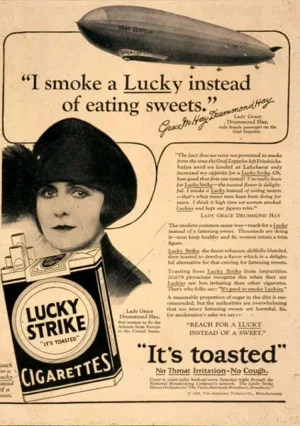
Bernays' first break into mainstream marketing was consuluting for Lucky Strike, Inc. in 1929. The tobacco industry had a problem on their hands. The market for tobacco sales to men was saturated. They needed new customers.
At the time, only 12% of women smoked tobacco. There was a social stigma that women who smoked were whores and prostitutes, which back then was largely true.
Now, a normal person would try to help the 12% kick the habit, tobacco and prostitution, so those women could regain their dignity and self-worth and join the other 88% of women to fight for real reforms. But there's no money in doing that.
Bernays $aw a golden opportunity

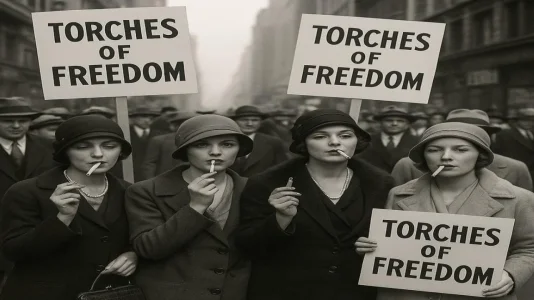
and created the "Torches of Freedom" campaign, kicked off by a women's march in NYC comple with printed signs and a Lucky Strike cig in every participant women's hand.
The Freud family's contribution to society:
Sigmund's projection of his perverted childhood fantasy and lung cancer.
Bernays went on to work for other major corporations' propaganda.. pardon me....marketing campaigns. Another blow to women. He made wealthy male corporate oligarchs even wealthier.