The Minimal Facts for the Resurrection of Christ.

@John K
Doing a quick reflection, I'm figuring it's probably unlikely that you've learned the Hebrew alef-bet, so I'm jumping ahead and providing the transliteration.

The sound made by the letter Chet is unknown in English. It is between a K and an H. It can be translated either ch or kh. I prefer kh, because there is less misunderstanding for those used to the ch sound in English.

Verse 9
Sheshet yamim ta’avod v’asita chol melakhtekha.

In Hebrew, things like determiners, prepositions, conjunctions, and possessives, etc. are not indicated by additional words like they are in English. Rather, Hebrew adds prefixes and suffixes. The word above, melakhtecha, combines the word melackha, meaning creative work, with a suffix. In this case, adding the suffix "tekha" makes it possessive. It becomes "YOUR work."

Verse 10
V’yom hashvi‘i Shabbat l’Adonai Elohecha, lo ta‘aseh chol melakhah, attah uvincha uvittecha, avdecha va’amatecha, uvehemtecha, v’gercha asher bish‘arecha.
 
This is what it looks like to me...
Yes, sorry. I mistakenly assumed you had more experience with Hebrew than was reasonable. I hope that post #22 works better for you.

When actual Hebrew, which uses the alef bet, is converted to the use of the English alphabet, that is referred to as a transliteration. Transliteration is a good word for you to adopt, especially if you are making a home in a Chosen Ministries church. :) You should be aware that there are often multiple ways to transliterate, since there is no one "approved" version. For example, one person might transliterate it melachah, and another melakhah.
 
There are no facts about Jesus’ resurrection, minimal or otherwise, inasmuch none can be tested and verified.

There are historical artifacts aplenty. Those artifacts are studied, translated, and judged this way and that.

Those interpretations, learned they may be, are opinions. Nothing more, and nothing less.

To consider them otherwise is to retreat from rational thought, and requires faith.

Faith needs no facts. Faith does not require proof. Faith only requires the suspension of disbelief, and a willful choice to believe.

Cheers,
Ian
 
What are you on about? I can't read the text in the earlier portion of your post.

I have plenty of lexicons and such.
Your screen print of the chart placing the Hebrew side by side with the English translation looked good. I'm a little confused, but at this point, we moved on to a transliteration in my post #22. Did this solve the problem for you?

I'm more than willing to do whatever it takes to assist you with this. Just let me know what your needs are.

It does appear that the perfectly ordinary English conversation from earlier in my post disappeared. Let me see if I can grab that and send it to you again. Grrrrr. I'm a tech stupid person. This is always stressful for me to figure out. Be back shortly.
 
@QuickTwist
I'm attempting to re-paste the section of the post that wasn't showing up in your screenprint. Please let me know if you received this in a readable version.

Which kind of Judaism?
Any movement within Judaism, meaning Reform, Conservative, Orthodox, Reconstruction, etc.
My pastor is Jewish and I get together with him sometimes.
Your pastor may be a Jew, but he is a Christian. He functions with a completely different paradigm.
I already told you I have already gone to a Seder...
Yes, you explained you have attended a Christian seder. That's fine. I hope that someday you can attend a Jewish seder as well. :)
It was done by the Apostles, who were the very first Messianic Jews.
If you and your congregation want to do things more similar to the Gentile churches and less like the Messianic denominations, I'm fine with that. Remember, I'm not here to tell you what you "should" do.

I think, however, that this choice is a bit confusing. The main purpose of Chosen People Ministries creating church plants is to make a worship space that will be comfortable and homey for Jews so that you can attract us and try to convert us. The choice to worship on Sunday will interfere with your primary mission. Shrug. It's just something to think about. But personally, I'm staying out of it. It's for you guys to decide.
Please quote a verse where this is used.
Oh sure. Certainly. There is more than one, but here is a good one, from Exodus 20, the ten commandments.
[Here is where the English/Hebrew chart was inserted, which I think may have screwed up the forum software, so I''m not including it)
I simply see it as an effort to get to the Jewish roots of following Jesus. My congregation does just that. Not tradition for the sake of tradition, but instead, trying to understand the Bible in the way Yeshua saw it.
I think that's a noble goal. It's a different definition of Messianic Judaism than MJ's use, but it's certainly not a bad thing. Thank you very much for sharing this. It gives me a window into what is important for you, and I hear you.
 
Any movement within Judaism, meaning Reform, Conservative, Orthodox, Reconstruction, etc.

There are plenty of earlier traditions of Judaism that think differently.

Your pastor may be a Jew, but he is a Christian. He functions with a completely different paradigm.

Than you. I am aware of that.

Yes, you explained you have attended a Christian seder. That's fine. I hope that someday you can attend a Jewish seder as well. :)

We had all the elements. Seems you have a bias against Christianity.

If you and your congregation want to do things more similar to the Gentile churches and less like the Messianic denominations, I'm fine with that. Remember, I'm not here to tell you what you "should" do.

Correct. My congregation tries to build a bridge between Jews and Gentiles in Messiah.

I think, however, that this choice is a bit confusing. The main purpose of Chosen People Ministries creating church plants is to make a worship space that will be comfortable and homey for Jews so that you can attract us and try to convert us. The choice to worship on Sunday will interfere with your primary mission. Shrug. It's just something to think about. But personally, I'm staying out of it. It's for you guys to decide.

Ecclesial happens more than just Sunday.

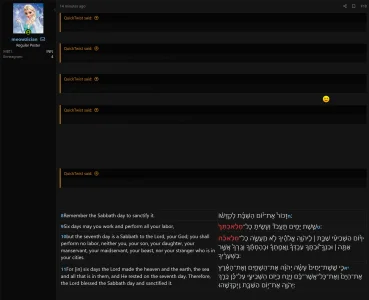
Oh sure. Certainly. There is more than one, but here is a good one, from Exodus 20, the ten commandments.


8Remember the Sabbath day to sanctify it.חזָכוֹר֩ אֶת־י֨וֹם הַשַּׁבָּ֜ת לְקַדְּשׁ֗וֹ:
9Six days may you work and perform all your labor,טשֵׁ֣שֶׁת יָמִ֣ים תַּֽעֲבֹד֘ וְעָשִׂ֣יתָ כָל־מְלַאכְתֶּךָ֒:
10but the seventh day is a Sabbath to the Lord, your God; you shall perform no labor, neither you, your son, your daughter, your manservant, your maidservant, your beast, nor your stranger who is in your cities.יוְי֨וֹם הַשְּׁבִיעִ֜י שַׁבָּ֣ת | לַֽיהֹוָ֣ה אֱלֹהֶ֗יךָ לֹ֣א תַֽעֲשֶׂ֣ה כָל־מְלָאכָ֡ה אַתָּ֣ה | וּבִנְךָ֣־וּ֠בִתֶּךָ עַבְדְּךָ֨ וַֽאֲמָֽתְךָ֜ וּבְהֶמְתֶּ֗ךָ וְגֵֽרְךָ֙ אֲשֶׁ֣ר בִּשְׁעָרֶ֔יךָ:
11For [in] six days the Lord made the heaven and the earth, the sea and all that is in them, and He rested on the seventh day. Therefore, the Lord blessed the Sabbath day and sanctified it.יאכִּ֣י שֵֽׁשֶׁת־יָמִים֩ עָשָׂ֨ה יְהֹוָ֜ה אֶת־הַשָּׁמַ֣יִם וְאֶת־הָאָ֗רֶץ אֶת־הַיָּם֙ וְאֶת־כָּל־אֲשֶׁר־בָּ֔ם וַיָּ֖נַח בַּיּ֣וֹם הַשְּׁבִיעִ֑י עַל־כֵּ֗ן בֵּרַ֧ךְ יְהֹוָ֛ה אֶת־י֥וֹם הַשַּׁבָּ֖ת וַֽיְקַדְּשֵֽׁהוּ:

I think that's a noble goal. It's a different definition of Messianic Judaism than MJ's use, but it's certainly not a bad thing. Thank you very much for sharing this. It gives me a window into what is important for you, and I hear you.[/COLOR]

I'll look up the definition later. I reinstalled Windows recently so I do not have my digital library of theology stuff.

And NP.
 
@QuickTwist
I'm attempting to re-paste the section of the post that wasn't showing up in your screenprint. Please let me know if you received this in a readable version.


Any movement within Judaism, meaning Reform, Conservative, Orthodox, Reconstruction, etc.

Your pastor may be a Jew, but he is a Christian. He functions with a completely different paradigm.

Yes, you explained you have attended a Christian seder. That's fine. I hope that someday you can attend a Jewish seder as well. :)

If you and your congregation want to do things more similar to the Gentile churches and less like the Messianic denominations, I'm fine with that. Remember, I'm not here to tell you what you "should" do.

I think, however, that this choice is a bit confusing. The main purpose of Chosen People Ministries creating church plants is to make a worship space that will be comfortable and homey for Jews so that you can attract us and try to convert us. The choice to worship on Sunday will interfere with your primary mission. Shrug. It's just something to think about. But personally, I'm staying out of it. It's for you guys to decide.

Oh sure. Certainly. There is more than one, but here is a good one, from Exodus 20, the ten commandments.
[Here is where the English/Hebrew chart was inserted, which I think may have screwed up the forum software, so I''m not including it)

I think that's a noble goal. It's a different definition of Messianic Judaism than MJ's use, but it's certainly not a bad thing. Thank you very much for sharing this. It gives me a window into what is important for you, and I hear you.

No need. I figured out the problem. You added a text color for some unknown reason. I fixed it.
 
Sometimes when you copy/paste it will change the text color so just be mindful of that
Try to do "paste as plain text" instead of paste
@meowzician
 
There are plenty of earlier traditions of Judaism that think differently.
For a few decades, there existed within Judaism a sect referred to as the Nazarenes, Jewish believers that Jesus was the messiah. It existed for a very short time before it was kicked out. Since that time, there has existed no other traditions in Judaism that allow for Jesus being the messiah.

It should also be noted that the Nazarenes never made a claim that Jesus is God. There has never existed any form of Judaism that tolerates the notion that God incarnated as a man.

I'm not coming down on you if you personally hold these beliefs. If you want to be a Chrsitian and believe that Jesus is messiah and God, and this brings you closer to Hashem, I say more power to you.

My focus in this part of the conversation is merely to say that these ideas are Christian ideas, and do not exist within Judaism, that indeed Judaism stands opposed to these notions. Thus, any congregation that makes these claims cannot also at the same time claim to be practicing Judaism.
Than you. I am aware of that.
Right. Than me and all of us who practice Judaism. It is fine for you to have this paradigm. I'm not trying to argue you out of it. I'm simply explaining that it is Christianity and not Judaism.
We had all the elements. Seems you have a bias against Christianity.
Not at all. If you want to hold a Christian seder, more power to you. I fully support you. But a Christian seder is not a Jewish seder. You have had the opportunity to experience a Christian seder. That's wonderful. I'm saying I hope that someday you have the opportunity to experience Jewish seder as well.

In a Jewish seder, Jesus will not be mentioned, nor will Christian insertions of your "shadows" theology or ideas of "fulfillment." And I'm quite certain that you haven't experienced the fullness of a Jewish Haggadah, which is really quite extensive, and full of so much stuff in Hebrew that most Christians feel a little lost their first time. A Jewish seder will often venture into Talmudic illustrations, which I have never heard in Christian seders. Anyhow, it's just different. I think it would be lovely if you had BOTH experiences.

As far as a "bias against Christianity" let me be very honest where I stand. It is VERY important to me that I be perfectly transparent so that there is no confusion on your part, and no sudden surprises.
  • On the one hand, I have no problems at all with you being Christian. You believe all sorts of stuff that is different, some of it incompatible with Judaism. But Judaism isn't concerned so much with belief as with ACTIONS. Your Christian faith provides you with an ethical approach to the world that I want to support, not undermine. If you are loving God with all your heart and your neighbor as yourself, that is exactly the sort of thing that I want to be a cheerleader for. Are you hearing me? :)
  • On the other hand (I feel like Tevye in Fiddler on the Roof) we absolutely do have different theologies. Indeed completely different paradigms. There are a number of significant Christian teachings that I think are mistaken. If you want to say that this is a bias against Christianity, then yes, I have a bias against Christianity.

 
No need. I figured out the problem. You added a text color for some unknown reason. I fixed it.
Oh, the red was meant to help you spot the word. It was supposed to be helpful. If it created problems instead, my apologies. Should I avoid using alternative text colors in the future?
 
Should I avoid using alternative text colors in the future?

People use both dark and light templates here so if you do change it make sure it's visible for both
 
For a few decades, there existed within Judaism a sect referred to as the Nazarenes, Jewish believers that Jesus was the messiah. It existed for a very short time before it was kicked out. Since that time, there has existed no other traditions in Judaism that allow for Jesus being the messiah.

It should also be noted that the Nazarenes never made a claim that Jesus is God. There has never existed any form of Judaism that tolerates the notion that God incarnated as a man.

I'm not coming down on you if you personally hold these beliefs. If you want to be a Chrsitian and believe that Jesus is messiah and God, and this brings you closer to Hashem, I say more power to you.

My focus in this part of the conversation is merely to say that these ideas are Christian ideas, and do not exist within Judaism, that indeed Judaism stands opposed to these notions. Thus, any congregation that makes these claims cannot also at the same time claim to be practicing Judaism.

Right. Than me and all of us who practice Judaism. It is fine for you to have this paradigm. I'm not trying to argue you out of it. I'm simply explaining that it is Christianity and not Judaism.

Not at all. If you want to hold a Christian seder, more power to you. I fully support you. But a Christian seder is not a Jewish seder. You have had the opportunity to experience a Christian seder. That's wonderful. I'm saying I hope that someday you have the opportunity to experience Jewish seder as well.

In a Jewish seder, Jesus will not be mentioned, nor will Christian insertions of your "shadows" theology or ideas of "fulfillment." And I'm quite certain that you haven't experienced the fullness of a Jewish Haggadah, which is really quite extensive, and full of so much stuff in Hebrew that most Christians feel a little lost their first time. A Jewish seder will often venture into Talmudic illustrations, which I have never heard in Christian seders. Anyhow, it's just different. I think it would be lovely if you had BOTH experiences.

As far as a "bias against Christianity" let me be very honest where I stand. It is VERY important to me that I be perfectly transparent so that there is no confusion on your part, and no sudden surprises.
  • On the one hand, I have no problems at all with you being Christian. You believe all sorts of stuff that is different, some of it incompatible with Judaism. But Judaism isn't concerned so much with belief as with ACTIONS. Your Christian faith provides you with an ethical approach to the world that I want to support, not undermine. If you are loving God with all your heart and your neighbor as yourself, that is exactly the sort of thing that I want to be a cheerleader for. Are you hearing me? :)
  • On the other hand (I feel like Tevye in Fiddler on the Roof) we absolutely do have different theologies. Indeed completely different paradigms. There are a number of significant Christian teachings that I think are mistaken. If you want to say that this is a bias against Christianity, then yes, I have a bias against Christianity.

Who is the arbiter of what Judaism is?

How long has your version of Judaism been in existence?
 
There are no facts about Jesus’ resurrection, minimal or otherwise, inasmuch none can be tested and verified.

There are historical artifacts aplenty. Those artifacts are studied, translated, and judged this way and that.

Those interpretations, learned they may be, are opinions. Nothing more, and nothing less.

To consider them otherwise is to retreat from rational thought, and requires faith.

Faith needs no facts. Faith does not require proof. Faith only requires the suspension of disbelief, and a willful choice to believe.

Cheers,
Ian

Your version of the philosophy of history lost.
 
Thanks for sharing your uninformed opinion.

Cheers,
Ian

Nothing uniformed about it. There was a big debate in the philosophy of history some time ago that was about whether we can even know anything about history or not. The people saying it is all narrative and we can't actually know anything about history lost out. Historians today, for the most part, do not take that line. One reason is that doing history becomes pointless if we can't come to any conclusions about the past.
 
Who is the arbiter of what Judaism is?
The Jewish people as a whole. Thus you find our decisions when you examine us over time.
How long has your version of Judaism been in existence?
In my vision of Judaism, I don't really see the evolution of the modern movements of Judaism as being new things that come into existence. I see Judaism as a tree growing from a seed into an adult tree with many branches over thousands of years. That adult tree may look very different from the seed, but you can follow the history back, showing the direct link. The adult tree is the same living thing as that tiny seed. Judaism is not a dead religion carved into stone, unchanging. It is a living religion, growing over time. Every age gets to stand on the shoulders of those who came before, allowing it to see just a little bit farther. Thus, my direct answer to your question is this: My Judaism stretches back to Abraham.

Now, to give the oversimplified answer that you want:
The origins of Orthodox Judaism.
  • The idea that halakha (Jewish law) is now unchangeable except as in such cases as new things appear (such as the discovery of electricity) has its origins in the publication of the Shulchan Aruch, first printed in 1565.
  • The Baal Shem Tov, who inspired the Chasidic movement, and ultimately the most well known forms of Ultra-Orthodoxy today, lived from 1698 until 1760.
  • Modern Orthodoxy is a movement that is a response to the Enlightenment and Reform Judaism. It's "founding father" is, I think, Rabbi Samson Raphael Hirsch (1808 to 1888).
Reform Judaism began in the late 18th and early 19th centuries in Germany. Its roots were tied to the Haskalah (Jewish Enlightenment). Early reforms began appearing around the 1790s to 1810s, but the movement became more organized in the 1820s and 1830s.

Conservative Judaism originated in the 19th century, but it took its distinct institutional form in the United States in the late 1800s and early 1900s. Its intellectual roots are in the “Positive Historical School” of Judaism in Germany, especially the work of Rabbi Zacharias Frankel (1801–1875), who broke from Reform Judaism by insisting that Halakha (Jewish law) remains binding while also recognizing that Jewish tradition develops historically over time.

Reconstructionist Judaism emerged in the 20th century in the United States, developed primarily by Rabbi Mordecai Kaplan (1881–1983). Its intellectual origins are usually traced to the 1920s and 1930s, when Kaplan began articulating Judaism as an evolving “civilization” rather than strictly a religion defined by binding divine law. The movement became institutionally distinct in 1968 with the founding of the Reconstructionist Rabbinical College in Pennsylvania.

As for my own personal affiliation, I have spent time in Orthodoxy, Conservative Judaism, and am now a member of a Reform Temple. My approach to Torah is more in line with that of Reform Judaism. However, I think there is a lot to be said for Heschel's approach: "My Judaism needs no adjectives."
 
Back
Top